
Responsibility is often felt by people as something heavy. In many workplaces, responsibility is wrongly associated with pressure, burden and the need to put in long hours.
People sometimes talk about “too much responsibility” as if it were a serious burden to carry. That is a great misconception.
Responsibility, when understood correctly, can be one of the most powerful supports for mental wellness, clarity, and conscious decision-making.
What is the term responsibility meaning?
The word responsibility has two parts: response and ability.
Response-ability has nothing to do with heaviness or automatic reactivity. Instead, it is your conscious choice to respond.
Responsibility, if understood correctly, is a source of clarity and ease.
Conscious decisions are always light. When you, as True Self, calmly observe, notice, and realize what your part in the actual moment is, you find that your inner power to decide something is freeing in nature.
Responsibility is what allows Free Will to work its magic.
In essence, you can look at it this way:
Responsibility = Freedom
When responsibility is normal and understood this way, leaders and employees take it with ease. Taking it adds freedom and allows people to act independently.
Daring to say ‘No’ is also part of taking actual responsibility. If you, at any given moment, lack the resources or needed information to make a conscious choice, a clear ‘No’ is always a better answer. If more information appears or more resources become available, you can always reconsider.
One part that may make conscious choice difficult is the lack of intrapersonal skills. Keeping a calm mind and being able to observe, differentiate, and access creativity can be some of these inner skills.
Training of intrapersonal skills is what enables you to lead all your inner processes, so that you can align being present and using sensing and awareness for taking a conscious choice.
When responsibility is forced without awareness-based intrapersonal skills, clarity, or support, it becomes stressful.
When responsibility is avoided, life and work both become fragmented and reactive. But when responsibility is calmly chosen, clearly understood, and aligned with your life and work purposes, it becomes surprisingly light. It creates focus, direction, and removes inner pressure, and supports better decisions rather than causes anxiety.
The Hidden Cost of Avoiding Responsibility
Avoiding responsibility may look easier in the short term. Problems arise when people defer decisions or wait for someone else’s approval instead of making conscious decisions. Such avoidance comes at a stressful mental cost.
Avoiding responsibility creates tensions, and due to that, questions often remain unanswered, decisions become delayed, and people stay mentally 'on alert' waiting for direction.
Such inner uncertainty is exhausting and causes stress and burnout, but people fail to notice it as they also avoid taking responsibility on the intrapersonal level. Most people lack the intrapersonal power to self-monitor their inner domain.
Tensions due to reactivity and avoidance keep your nervous system activated and increase stress and anxiousness. Over time, such inner tension contributes to the rise of chronic stress, burnout, and anxiety much more than clearly taken conscious responsibility ever could.
From a mental wellness perspective, ambiguity is far more draining than accountability.
A calm mind is always clear and ready to act peacefully. A nervous, worried, stressed, and anxious mind loses the ability to act consciously and instead becomes reactive. Whatever is said to you is causing a cascade of inner reactions until you avoid responsibility.
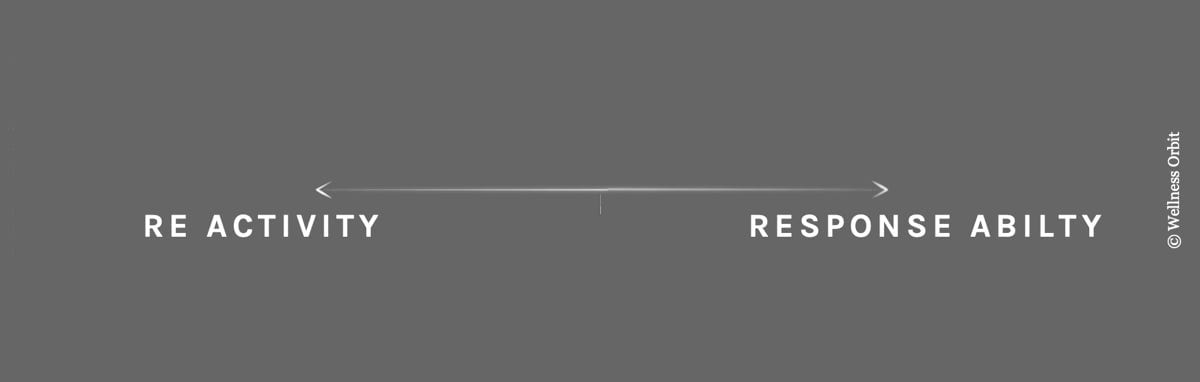
The more you react, the less freedom and inner peace you have.
There is no inner freedom on the left-hand side, and total inner freedom on the right-hand side of the graph below.
Responsibility Reduces Mental Load
When responsibility is consciously taken, your mind can relax and focus on the action that supports your decision. You know what is yours to decide and what isn’t. You no longer need to second-guess every action or worry about invisible expectations. This reduces worry as well as cognitive, mental, and emotional noise.
Responsibility, in this sense, is correctly seen as a freeing inner superpower. As said, the correct equation is here simple: Responsibility = Freedom.
Lead your awareness at will
Responsibility defines where your attention or awareness is consciously directed.
Focus gives you inner purpose and motivation. When attention is known, your intrapersonal skills (provided that you possess them) can become supportive of your (life and work) journey.
Taking full responsibility creates clarity of your focus, purpose, and motivation, based on what you decided. Then, the effortless motivation stems from the inherent meaning of the work itself.
For example, taking full responsibility for your health means that you train your physical body and mind while they are well. You secure high-quality natural food, take time for relaxation, sleep, and handle personal and work relationships calmly.
The world-class tennis player Novak Đoković has said it well, “It’s a daily practice of self-awareness and intention. Whether it’s through nutrition, breathing, movement, or stillness. I believe striking harmony in all areas of life can bring much more joy and contentment than focusing on individual elements themselves. To me, wellness shouldn’t be about quick gains, it should be a lasting feeling.”
All emotions or feelings fade. The First Law of Thermodynamics: “Energy can’t be created or destroyed; it can only be converted from one form to another.” So, you need to take responsibility for your emotions. Emotions are powerful and supportive inner tools, if used consciously and not happening to you reactively.
Taking full responsibility is total freedom, as it means being free from all automatic subconscious inner reactivity
By leading your emotions, thoughts, and imagination at will, you will experience much greater freedom.
When you know your True Self, you discover that part of you is The Joy of Life. This joy is silent, with zero tension. Also, your True Self has zero tension.
When you make conscious decisions with deep and peaceful inner calmness, responsibility becomes your greatest superpower, securing your ease of being and your ability to make decisions regardless of the stressors and pressures around you.
Responsibility Enables Conscious Decision-Making
Conscious decisions always require inner peace and calmness. Being able to respond consciously starts from your intrapersonal ability to pause, notice, differentiate, assess, and choose by using awareness and sensing at will.
When you know you are responsible for your life and your decisions, you are more likely to slow down to choose clearly.
Before making a decision, you listen to your intuition, notice what you sense and are aware of, and, while being present in your physical body, also consider consequences, trade-offs, and long-term impact. Using inner silence and awareness is combined with full presence and sensing, is the way you move from mental and emotional reactions to conscious and calm action.
Conscious decisions save energy because they reduce mental and emotional regret, and also the need to redo things. This prevents conflicts within you and around you. A fit mind thrives on intentionality.
Light Responsibility Versus Heavy Pressure
As you may now understand, taking a conscious decision is in essence responsibility, and using such inner power to decide is light, but it demands being fully present. Pressure, on the other hand, is often externally imposed, urgent, reactive, and emotionally charged as it fails to notice your current reality and acts based on previous (positive or negative) experiences.
When organizations confuse pressure with responsibility, mental wellness suffers. People become first slightly reactive and then even more reactive, defensive, and risk-averse.
Responsibility is a proactive measure, while subconscious reactivity is a path to more problems. Workplaces where people constantly react tend to pile up more and more problems.
When responsibility is seen as ownership of conscious decisions with organizational support, people become more engaged and productive at work. Of course, intrapersonal skills and training your mind to be resilient matter. That is why the systematic proactive mental wellness approach, presented on this website, is needed.
|
Training your mind while it is still relatively well supports the prevention of mental health issues, and secures healthy ways to work, act, and cooperate with others.
This is why leader mental wellness matters. Only calm-minded leaders, who take responsibility, can demonstrate that responsibility is something supportive, kind, and life-supporting on a very wide scale.
Training the mind and learning to remove your inner reactivity is what allows responsibility to feel light.
Taking responsibility, in turn, reduces stress by restoring intrapersonal control and agency. This is particularly important in fast-paced environments where decisions carry real consequences. Calm responsibility leads to better outcomes than anxious urgency ever will.
Showing Responsibility Earns Trust and Builds Psychological Safety
Responsibility also plays a key role in trust. When people take conscious ownership of their decisions and actions, trust is earned naturally. Teams feel safer because they know where accountability lies.
When trust thrives, hidden agendas fade, and supportive and honest dialogue, mutual support, and partnerships rise.
Psychological safety is created by taking responsibility.
When trust, empathy, and willingness to help others meet mental wellness, both individuals and organizations start to thrive. However, this doesn’t remove the need for actual contribution, solving daily problems or complicated tasks; it just gives freedom to perform steadily without suffering from inner pressure.
For securing psychological safety, a few conditions must be present. Expectations need to be clear; leaders need to be accountable and must model the behavior they expect. Also, workloads must be realistic, and radical open-mindedness needs to be applied peacefully.
Truth sets you free and is a precondition for conscious decision-making.
Most importantly, responsibility should be framed as a conscious choice. Choosing responsibility consciously, by using free will, is what strengthens agency.
From a mental wellness perspective, this approach matters. Burnout often arises from replacing responsibility with stressful pressure, while clarity, control, and/or recovery times for people are missing.
Conclusion: Responsibility as a Foundation of Conscious Leadership
At its best, responsibility is freeing. It allows people to act with autonomy, make meaningful contributions, and grow in confidence.
Taking conscious responsibility is what replaces anxiety with purpose and confusion with direction.
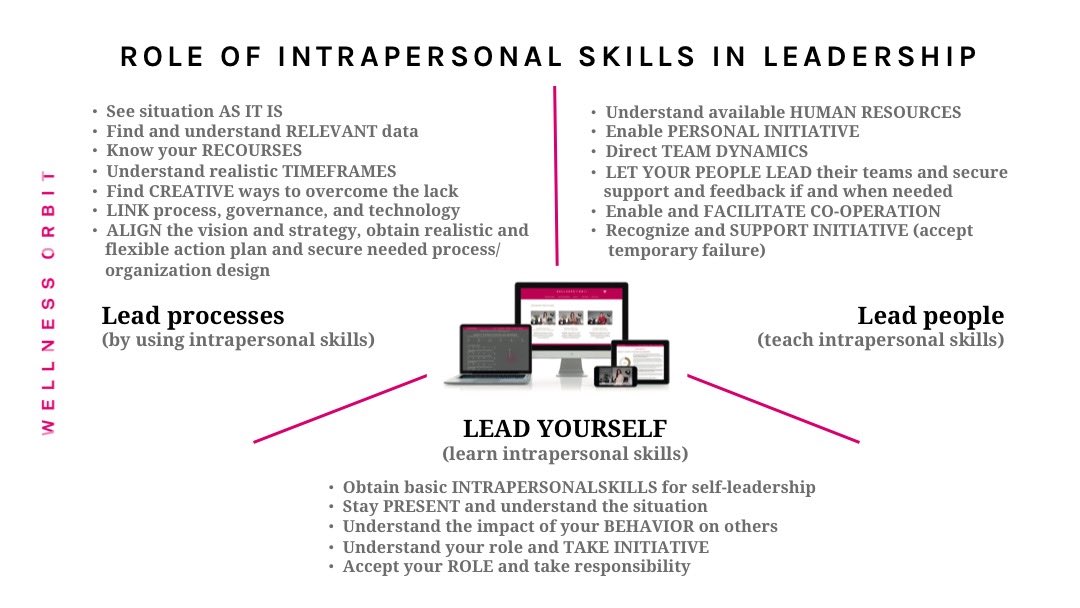
When responsibility is understood as conscious decision ownership rather than burden, it supports mental fitness, result-oriented decision-making, and sustainable performance. Self-leadership then becomes conscious and calm leadership of people and processes.
In this light, responsibility is something beautiful to be held with calm intent. When that happens, responsibility becomes light and, in turn, work becomes healthier, more human, and more effective.
Make taking personal responsibility easy and start training your mind, NOW!
|